
TEGUCIGALPA, HONDURAS
Holiday Houseboys
To fully appreciate Tegucigalpa you need to book a Holiday Houseboys, your local gay friendly tour guide. He will be able to show you around like a local. Whether you want to see the tourist sites, places off the beaten track or discover new experiences, the Holiday Houseboy is there to help you. He looks after your safety and welfare at all times.
Vacancy

How To Book A Holiday Houseboy
To book any of our Holiday Houseboys please go to the booking form.
Or send an email to info@holidayhouseboys.com.
Alternatively WhatsApp +34-676-78 63 51.
Remember a Holiday Houseboy is your gay friendly tour guide who looks after your safety and welfare at all times.
Please note these are guide services and not sexual services.
Our other destination in Honduras is Roatan.
Highlights of Tegucigalpa
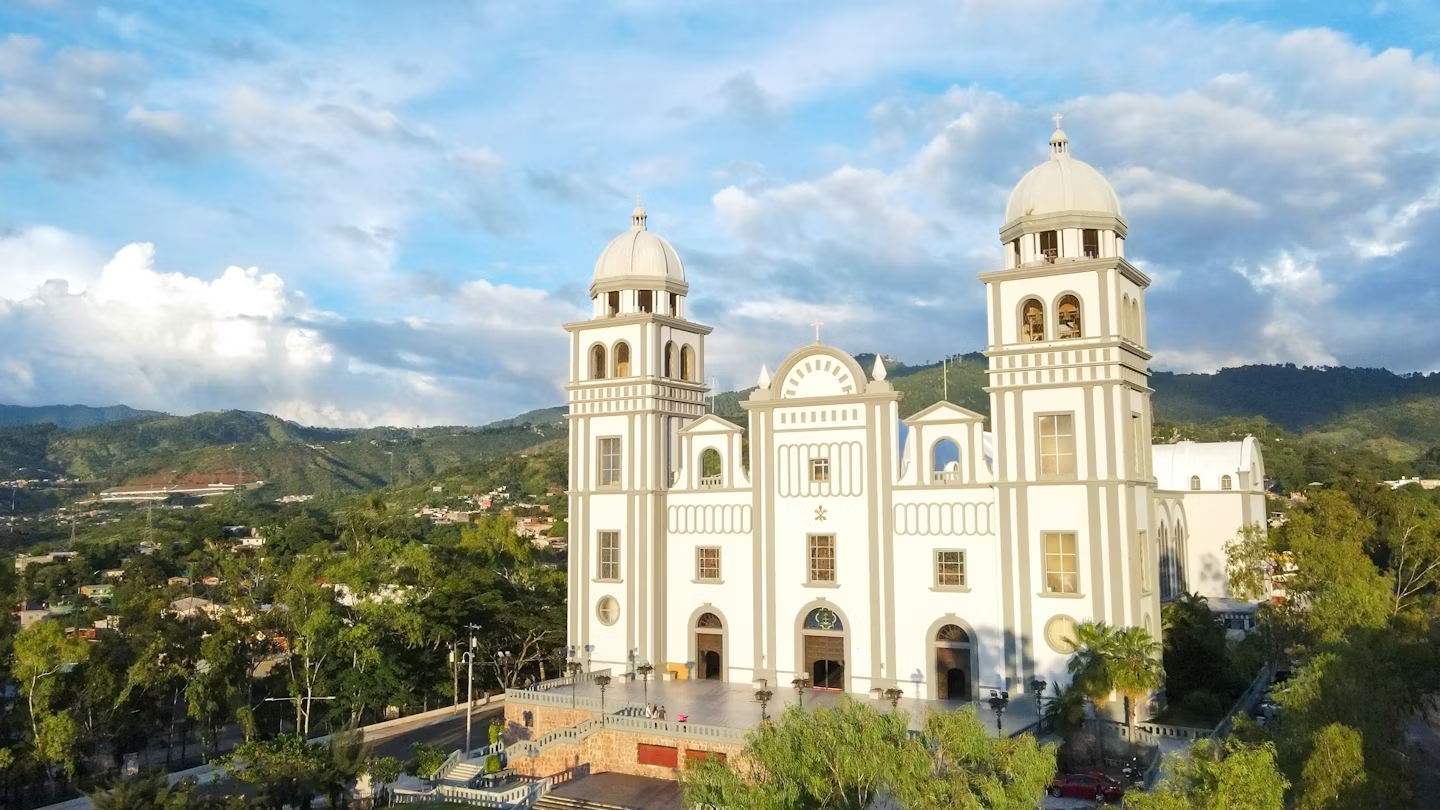
Tegucigalpa is the capital and largest city of Honduras, serving as the country’s political, administrative, and cultural center. Nestled in a mountain valley in the southern-central part of the nation, the city sits at an elevation of around 1,000 meters above sea level, giving it a relatively mild climate compared to Honduras’s coastal regions.
Founded in 1578 by Spanish settlers as a silver-mining town, Tegucigalpa has a long history tied to colonial trade and industry. Its name is believed to originate from indigenous Nahuatl words, often interpreted as meaning “silver hills,” reflecting the area’s early mining importance.
In 1880, Tegucigalpa was officially declared the capital of Honduras. Today, it functions together with its neighboring city, Comayagüela, forming a single metropolitan area divided by the Choluteca River. Together, they represent the country’s largest urban population and main decision-making hub.

The historic center of Tegucigalpa offers insight into the city’s colonial past. Landmarks such as the Cathedral of St. Michael the Archangel, built in the 18th century, and the old plazas reflect Spanish architectural influence. Narrow streets, traditional buildings, and local markets give the area a distinct sense of history and everyday life.
Government institutions dominate much of the city. Tegucigalpa is home to the Presidential Palace, the National Congress, Supreme Court, and numerous ministries. This concentration of political power makes the city central to national policy, diplomacy, and public administration.
Culturally, Tegucigalpa plays a key role in preserving and promoting Honduran identity. The city hosts important institutions such as the National Art Gallery and the National Museum of Anthropology and History, which showcase indigenous heritage, colonial history, and modern artistic expression.
Despite its urban density, nature surrounds Tegucigalpa. Pine-covered mountains rise on all sides, creating scenic views and helping shape the city’s character. La Tigra National Park, located just outside the city, is one of Honduras’s most important protected areas and a popular destination for hiking, birdwatching, and enjoying cloud forest ecosystems.
The city’s economy is centered on government services, commerce, education, and small industries. Tegucigalpa is home to several universities, including the National Autonomous University of Honduras (UNAH), which plays a major role in education, research, and social debate.
Daily life in Tegucigalpa reflects both tradition and modernity. Street vendors sell local snacks and fresh produce, while shopping malls, restaurants, and cafés serve a growing middle class. Honduran cuisine, featuring corn-based dishes, beans, meats, and regional flavors, is widely enjoyed throughout the city.
Like many large cities in Central America, Tegucigalpa faces challenges related to infrastructure, traffic, and social inequality. However, the city also shows resilience through community initiatives, cultural creativity, and ongoing efforts to improve urban life.
As a gateway to the rest of Honduras, Tegucigalpa connects travelers to colonial towns, mountain regions, and the country’s Caribbean and Pacific coasts. Its international airport links the capital with destinations across the Americas.
In conclusion, Tegucigalpa is a city shaped by history, politics, and geography. Surrounded by mountains and rooted in colonial origins, it stands as the heart of Honduras’s national life. While complex and challenging, Tegucigalpa offers a meaningful insight into the culture, resilience, and identity of the Honduran people.
